Current Work
Werner Erhard has been creating transformational models and applications for individuals and organizations for over 40 years. Werner Erhard is considered a leading thinker in academic and corporate communities and is currently engaged in rigorous examination and presentation of his ideas. As a creator of models he provides new paradigms to thinkers and practitioners in fields as diverse as philosophy, business, education, psychotherapy, third world development, medicine, conflict resolution, and community building. Werner Erhard has written many scholarly papers about the topics of transformation, integrity, performance, and leadership and has lectured at universities and schools such as Harvard University, The University of Rochester, Erasmus Academie, University of Southern California, MIT’s Sloan School of Management, Dartmouth College, University of British Columbia, Clemson University College of Business, Stanford University. Rutgers University, and UCLA. Werner Erhard's academic work has been cited in numerous academic publications.
“The profound impact of Werner Erhard’s work on culture and society is a manifestation of an incredible insight, the experience of being.” James R. Doty, Professor of Neurosurgery, Stanford University School of Medicine, MD Founder & Director, The Center for Compassion and Altruism Research and Education
Capitalism and Society
Putting Integrity Into Finance: A Purely Positive Approach, Published by The Center on Capitalism and Society in their Journal: Capitalism and Society, Columbia University, Volume 12, Issue 1, May 2017
From the Abstract: Integrity as we define it (or the lack thereof) on the part of individuals or organizations has enormous economic implications for value, productivity, and quality of life. Indeed, integrity is a factor of production as important as labor, capital, and technology. Without a clear, concise, and most importantly, an actionable definition of integrity, economics, finance and management are far less powerful than they can be.
Leadership Course
BEING A LEADER AND THE EFFECTIVE EXERCISE OF LEADERSHIP
An Ontological / Phenomonological Model
If there ever was a time for a new model of leadership, that time is now. The Leadership Course created by Werner Erhard, Professor Michael C. Jensen, and Steve Zaffron, will acquaint participants with a new approach to leadership; a new and unique model of leadership based on access to leadership (being a leader) and integrity. Read More

Professor Michael Jensen and Werner Erhard , two extraordinary thinkers, engage in a conversation that explores groundbreaking access to being a leader and to the effective exercise of leadership as one's natural self-expression" in their talk, 'Creating Leaders: A New Model - Ten Years On' for the Sands Leadership Lecture Series at the University of Rochester Simon Business School on February 5, 2014.
The Handbook for Teaching Leadership
Knowing, Doing, and Being
Harvard University’s 2011 publication of The Handbook for Teaching Leadership, edited by thought leaders Scott Snook (Senior Lecturer) Dean of Harvard Business School Nitin Nohria and Dean of Harvard College Rakesh Khurana includes a chapter written by Werner Erhard, Michael C. Jensen and Kari Granger. The editors write, “In a highly provocative chapter titled “Creating Leaders" this eclectic group of scholars argues for adopting a decidedly ontological approach to leadership education that promises to leave students actually being leaders.” Read More
New Paradigm for Performance
The Barbados Group is committed to creating a new paradigm of performance. The Group is an international group of scholars, consultants and practitioners who were brought together by Werner Erhard. The working name for this new paradigm is "The Ontological Foundations of Performance." This new paradigm is based on the fundamental proposition that the performance of an individual, group or organization is a correlate of the way the world in which, and on which, that entity is performing "occurs" for that entity. This new paradigm also offers access to this "occurring" through a specific use of a distinct aspect of language.
The first publication in book form to come out of the Barbados Group’s exploration and the tenants of “The Ontological Foundations of Performance” is Three Laws of Performance, the 2009 best selling book by Steve Zaffron and Dave Logan. Read More
Integrity
"A PURELY POSITIVE* THEORY OF INTEGRITY" ['Positive' as used here is as it is used in the sciences – it does not mean something good or desirable, it means the way integrity actually is and operates].
Academic Paper in Progress available at SSRN
Werner Erhard and Professor Michael Jensen define integrity and discuss their research linking integrity and personal and corporate performance. They address integrity in a developing academic paper, whose primary purpose is to present a positive model of integrity that provides a powerful access to increased performance for individuals, groups, organizations, and societies.
This academic paper was initially presented at the Gruter Institute Conference on Values in June 2006. Since then it has been presented over 40 times, including at the Social Innovation Research Seminar Series, at INSEAD, Fontainebleau, France, March 16, 2009 and most recently at Zayed University Convention Center, Dubai, UAE, October 01, 2014 as part of a six day innovative course on leadership for participants in the Middle East.
Read More on this New Model of Integrity.
"PUTTING INTEGRITY INTO FINANCE: A PURELY POSITIVE APPROACH"
By Werner Erhard and Michael C. Jensen, Published in Capitalism and Society, Columbia University, Volume 12, Issue 1, May 2017
Working Papers: Social Science Research Network (SSRN), Inc.; National Bureau of Economic Research (NBER); European Corporate Governance Institute (ECGI), Harvard Business School Working Knowledge
Abstract: We summarize our new positive theory of integrity that has no normative content, ['positive' as used here is as it is used in the sciences – it does not mean something good or desirable, it means the way integrity actually is and operates] and argue that there are large gains from putting integrity into finance – into both the theory and practice of finance. We define integrity as being whole and complete and unbroken. We argue that if finance scholars, teachers and practitioners take this approach to applications in finance there are huge gains to be achieved. - read more at SSRN
Journal: Capitalism & Society, The Center on Capitalism and Society, Columbia University, May 2017
Harvard Law School Forum on Corporate Governance and Financial Regulation
Harvard Business School Faculty and Research
Harvard Business School - Working Paper Series
ECGI (European Corporate Governance Institute) Working Papers
University of Maryland - College of Behavioral and Social Sciences
University of Cincinnati - College of Law - Black, Barbara, "Curbing Broker-Dealers' Abusive Sales Practices: Does Professor Jensen's Integrity Framework Offer a Better Approach?" (2013). Faculty Articles and Other Publications. Paper 208.
Hayek: A Collaborative Biography
Werner Erhard is the author of the final chapter “Bill Bartley: Biographer Extraordinary” in the book Hayek: A Collaborative Biography edited by Dr. Robert Leeson, Visiting Professor of Economics at Stanford University and Adjunct Professor at Notre Dame University.
Fifteen scholars have collaborated to provide a comprehensive analysis of the life and work of one of the most influential economists of all time. The authors include the Official Historian of the Reserve Bank of Australia (Selwyn Cornish), the Director of the von Mises Institute (Douglas French), Hayek's second General Editor (Stephen Kresge), the founder of est (Werner Erhard), plus seven Professors - of Economics (David Laidler, Viktor Vanberg and Robert Leeson), Economic History (Avner Offer and Jan-Otmar Hesse), Politics (Melissa Lane) and Social Policy (Nils Goldschmidt). The Universities represented include Stanford, Princeton, Oxford, Bielefeld, Western Ontario, Uppsala and Freiburg. This is the first time that such a distinguished collection of scholars – from a variety of perspectives – have attempted to integrate Hayek's life, work and influence on world history with the archival evidence.
The Mastery Foundation
The Mastery Foundation is a non-profit, volunteer, interfaith organization established in 1983. The work of the Mastery Foundation is to create new conversations and possibilities for the future in the areas of peace and reconciliation, interfaith ministries and community empowerment.
In 1983, Werner Erhard accepted the request of the newly formed Mastery Foundation
to consult in the creation of a transformational program for those
who minister and serve others. Since then, he has continued to donate
his expertise and services to the Mastery
Foundation, at times developing new program material and leading
courses.
In 1999 Werner Erhard, in collaboration with Peter Block, developed the Mastery Foundation's Ireland Initiative, bringing together a broad base of community leaders at work on peace and reconciliation in Northern Ireland. Held annually since that time, this intensive workshop provides a unique process that provokes new ways of thinking and conversations designed to produce breakthroughs for the participants in their relationship to the past, the future, and to what is possible for themselves and their communities.
At the October 2006 Mastery Foundation School for Leadership inauguration which took place in Northern Ireland, Werner Erhard presented a new model of integrity upon which the foundation of the new school was based.
The Eranos Foundation
The Eranos Foundation was founded in the 1930’s to provide
a point of contact and opportunity for discussion for thinkers from
disparate fields of knowledge ranging from depth psychology and comparative
religion to history, literary criticism and folklore. The yearly conferences
or "Tagungs" were frequented by luminaries like Jung, Martin
Buber, Henry Corbin, D.T. Suzuki and others. The Foundation continues to bring together thought leaders such as Werner Erhard who can serve the cause of cultural awakening, deepening vision, and the integration of the inner life of mind and spirit with the outer life of action.
A BREAKTHROUGH IN INDIVIDUAL AND SOCIAL TRANSFORMATION
Presentation By Werner Erhard At The
Eranos Conference 2006
Ascona, Switzerland
18 June 2006
"While I was asked to speak about individual and social transformation, I will start by talking about knowing.
"Think of the circle I have drawn here as containing all knowledge. The circle is divided into three sections. The first section of all knowledge is called, 'What I know that I know'" We all know what to do with what we know that we know – we put it to use. The next section of all knowledge is called, 'What I know that I don’t know.' Again, we all know what to do with what we know that we don’t know – we learn. Finally, there is this vast remaining section of all knowledge called, "What I don’t know that I don’t know." What to do about what we don’t know that we don’t know is something of a dilemma. And, what we don’t know that we don’t know about human beings is an important question when it comes to individual and social transformation. Read
the full article...
__________________________________________________________
Transformation: The Life and Legacy of Werner Erhard
The est Training, Werner Erhard and his work and the ideas, all put into perspective through the dozens of stories told by numerous professional and academic experts. Watch the full documentary here.
Werner Erhard on the Internet
|
|---|


Current Work...
Early Work...
Werner On...
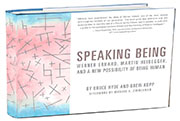
Speaking Being: Werner Erhard, Martin Heidegger, and a New Possibility of Being Human
"While some readers of Speaking Being may be familiar with The Landmark Forum, most don’t know its connections to the philosophical tradition. Hyde and Kopp have woven together concise explanations of Heidegger’s notoriously difficult thinking with an actual transcript of Erhard’s Forum—by turns moving, funny, and shocking. This juxtaposition draws the reader into the experience and powerfully illuminates the teachings of these two thinkers."
David Storey, Associate Professor, Boston College, author of Naturalizing Heidegger
Read Werner Erhard's Academic Papers at SSRN (Social Science Research Network)

Werner Erhard is consistently ranked as one of SSRN’s top authors in total number of downloads.
Putting Integrity Into Finance: A Purely Positive Approach, by Werner Erhard and Michael C. Jensen, Published by Columbia University's Center on Capitalism and Society in their Journal: Capitalism and Society, Volume 12, Issue 1, May 2017
Werner Erhard - Stanford University, 2017
Discussion with Werner Erhard and Professor Jonathan D. Moreno in 2016 at the University of Pennsylvania First Annual Bioethics Film Festival
Working Paper by Werner Erhard and Michael C Jensen
Working Paper by Werner Erhard and Michael C Jensen
Working Paper by Werner Erhard and Michael C Jensen
Insigniam Quarterly
By Werner Erhard and Michael C. Jensen
Werner Erhard: A Timeline of Work and Ideas
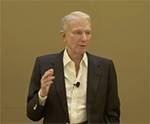
Werner Erhard at Stanford University, 2017

Werner Erhard is the author of the final chapter "Bill Bartley: Biographer Extraordinay" in the book Hayek: A Collaborative Biography edited by Dr. Robert Leeson, Visiting Professor of Economics at Stanford University.

Werner Erhard at Geisel School of Medicine at Dartmouth
Werner Erhard speaks to Kennedy School students on his latest work: "Why We Do What We Do: A New Model Providing Actionable Access to the Source of Performance."
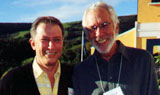
Werner Erhard and Peter Block working together on Peace and Reconciliation throughout the world.
"Being a Leader and The Effective Exercise of Leadership: An Ontological Model," led by Michael C. Jensen, Werner Erhard, Steve Zaffron and Kari Granger.
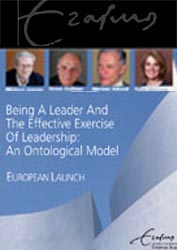
Werner Erhard creates and shares new models and paradigms with great thinkers and universities around the world.
Integrity
A Business Conference -
May 8, 2008
Transformation:
The Life and Legacy of Werner Erhard