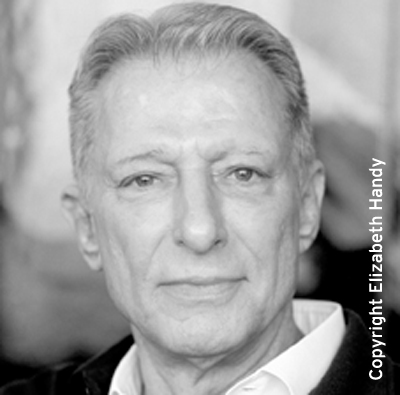
Current Work...
Early Work...
Werner On...
Leadership
BEING A LEADER AND THE EFFECTIVE EXERCISE OF LEADERSHIP
An Ontological / Phenomonological Model
If there ever was a time for a new model of leadership, that time is now. The course Being A Leader and The Effective Exercise of Leadership created by Werner Erhard, Michael C. Jensen, Steve Zaffron, Kari Granger and Jeri Echeverria is a new and unique model of leadership that leaves participants being a leader and exercising leadership effectively as their natural self-expression.
Simon Business School’s fifth annual New York City Conference was held on May 8 2014, bringing together leading policy makers, industry leaders, academics, and national media to discuss pathways to success for companies today in the face of increasing global competition and innovation. Professor Michael C Jensen presented a talk on transforming how leaders and educators are taught.
Professor Michael Jensen and Werner Erhard, two extraordinary thinkers, engage in a conversation that explores groundbreaking access to being a leader and to the effective exercise of leadership as one's natural self-expression" in their talk, 'Creating Leaders: A New Model - Ten Years On' for the Sands Leadership Lecture Series at the University of Rochester Simon Business School on February 5, 2014.
The course, while still in development, has been taught since 2005 at the University of Rochester Simon School of Business to MBA, PhD, and Executive Development Program students, faculty, administrators, alumni and outside corporate executives. It is currently being taught to undergraduates and faculty at the United States Air Force Academy. In August 2008, the course was also taught to some 250 senior management consultants from 66 separate firms. In January 2009 the course was delievered at Erasmus Academie in Rotterdam (a version of which was taught at the Erasmus University Law School). The course was delivered at Texas A&M University Mays School of Business in June 2010; in India under the auspices of the IC Centre for Governance and MW Corp in November 2010; at the Geisel School of Medicine at Dartmouth in June 2012; at entrepreneurship@UBC, University of British Columbia in Vancouver, BC, Canada in 2013; in Singapore, hosted by Nanyang Technological University in July 2014; in Dubai in January 2015 at the Zayed University Convention Center; at Clemson University, College of Business in 2016 and at the University of California, Los Angeles in 2018.
The course has also been delivered in Whistler, B.C. Canada, in October 2012; Cancun, Mexico in October 2013 and December 2015, in Bermuda in November 2014; and in Abu Dhabi U.A.E. in October 2016 to benefit the Erhard-Jensen Ontological / Phenomenological Initiative which supports the delivery of the course in Universities throughout the world.
An abstract of the working paper titled, "Creating Leaders: An Ontological Model" is available at Harvard Business School's Working Knowledge website.
In the course participants discover a new and powerful model of integrity and the difference between management and leadership. The course is designed to open up and leave participants with an expanded personal opportunity - ways of being, thinking, planning, and action that leave them being a leader and exercising leadership effectively. This new model of leadership and its practice is applicable for all domains of leadership, including personal leadership (being the leader of yourself and your own life) and team and organizational leadership in school, business, and any other area in which one would like to make a difference (e.g. family, community, and politics).
HARVARD'S HANDBOOK FOR TEACHING LEADERSHIP
The quotes below are from the editor’s introduction of a chapter titled “Creating Leaders: An Ontological/Phenomenological Model” written by Werner Erhard, Michael C. Jensen, and Kari Granger in the book The Handbook for Teaching Leadership: Knowing, Doing, and Being, 2012 (p. xxiv). The book is edited by Harvard Business School’s Scott Snook (Senior Lecturer), Nitin Nohria (Dean of Harvard Business School and George Baker Professor of Administration), and Rakesh Khurana (Dean of Harvard College and Marvin Bower Professor of Leadership Development).
“How does one teach leadership in a way that not only informs them about leadership but also transforms them into actually being leaders? …this eclectic group of scholars argues for adopting a decidedly ontological approach to leadership education that promises to leave students actually being leaders. Contrasting their ontological approach described as being and action as experienced "on the court" with more traditional perspectives where leadership is observed and commented on "from the stands," this chapter presents a rigorous theory of leadership education that begins and ends with the following bold promises to students:
“You will leave this course being who you need to be to be a leader.
“You will leave this course with what it takes to exercise leadership effectively.
“…by following a rigorous, phenomenologically based methodology, students have the opportunity to create for themselves a context that leaves them actually being a leader and exercising leadership effectively as their natural self-expression."
Werner Erhard's (and his colleagues') work on leadership has been cited in many academic publications including the following:
An Ontological/Phenomenological Model of Leadership: Baker, Uchenna (author); White, Carolyne J. (chair); Alidou, Ousseina D. (internal member); Backstrand, Jeffrey (internal member); Josephson, Jyl (internal member); Rutgers University; Graduate School - Newark
Management Education For The World: A Vision For Business Schools Serving People And The Planet; By K. Muff, Thomas Dyllick, M. Drewell, J. North, P. Shrivastava, J. Haertle
Developing Globally Responsible Leaders In Business Schools: A Vision And Transformational Practice For The Journey Ahead; by Katrin Muff, Journal of Management Development 2013 32:5, 487-507
The Needs of Participants in Leadership Development Programs: A Qualitative and Quantitative Cross-Country Investigation; by William A. Gentry, Regina H. Eckert, Vijayan P. Munusamy, Sarah A. Stawiski and Jacob L. Martin
Handbook of Research on Teaching Ethics in Business and Management Education, edited by Charles Wankel
Faculty Development for Leadership and Management, by Tim Swanwick and Judy McKimm
Being Leaders for Socially Just Education: Engaging New Politics of Possibility, by Satyen Baldev, Timothy Choi, Bushra Mahmood, Richelle Oslinker, Faten Sumrein, Aminah Waqar, and Carolyne J. White
Leading the 'Being a Leader and the Effective Exercise of Leadership: An Ontological and Phenomenological Model' Course, by Robert H. Owen and Carolyne J. White
Fostering Democratic Practices in the Classroom by Uchenna Baker; In: Lowery C., Walker A., Thomas C. (eds) Un-Democratic Acts. SensePublishers, Rotterdam, 2016
Intergenerational Ontology & Leadership: Uniting the Multigenerational Workforce, by Gabrielle Ellerbrock, Pepperdine University, ProQuest Dissertations Publishing, 2017. 10607807
An OPPT-In Approach to Relational and Emotional Organizational Communication Pedagogy, by Sarah J. Tracy, Tara M. Franks, Margaret M. Brooks, and Trisha K. Hoffman
See more scholarly publications that have cited the work of Werner Erhard and his colleagues.
Reference and Links:
Creating Leaders: An Ontological/Phenomenological Approach, An Introduction
The Three Foundations of A Great Life, Great Leadership, and A Great Organization, by Werner Erhard and Professor Michael C. Jensen
Harvard Business School Working Knowledge: Introductory Reading For Being A Leader
HBS Professor Emeritus Michael Jensen to Present Seminar at Erasmus Academie
Harvard Business School Working Papers
Leadership and the Next Presidency - video
Psychology Today 2009 Neuroleadership Summit - How to foil an amygdala hijack
The Leadership Course - Werner Erhard
A New Model of Leadership - Presentation at ESADE - Barcelona, March 22, 2007 (pdf)
Leadership and Leadership Development: An Ontological Approach - Michael C. Jensen, Harvard Business School
Erasmus Course - A Participant's Perspective - Part One
Erasmus Course - A Participant's Perspective - Follow Up
Erasmus Course - A Participant's Perspective - Part Two
Erasmus Course - A Participant's Perspective - Final
Vail Leadership Institute What's love got to do with leadership?
Faculty Training for Delivering the Leadership Course at the United States Air Force Academy (USAFA)
Harvard Business School Working Knowledge, December 3, 2010: Creating Leaders: An Ontological Model - Forthcoming in: THE HANDBOOK FOR TEACHING LEADERSHIP, Scott Snook, Nitin Nohria, Rakesh Khurana, eds., Sage Publications, 2011
Society For Humanistic Psychology on the forthcoming chapter on Creating Leaders: An Ontological Model in The Handbook for Teaching Leadership
Academy of Management Learning & Education Publication - Book Review of The Handbook For Teaching Leadership, Knowing, Doing and Being: "Who better to begin a section on the being of leadership than Werner Erhard and colleagues Michael Jensen and Kari Granger."
The Leadership Course at Panchgani, India, sponsored by IC Centre for Governance and MW Corp - The Times of India
Harvard Business School's Working Knowledge First Look, October 26, 2010
Jensen Leadership Seminar on Facebook
The Handbook For Teaching Leadership: Knowing, Doing, and Being
Harvard Business School, Working Knowledge, First Look: February 28, 2012, Creating Leaders: An Ontological/Phenomenological Model
Harvard University Center For Public Leadership: Growing Leaders in a Changing World - Introduction
High-Performance Leadership in a Hurry?: Four Foundations of Great Leadership - Insigniam
Lest We Forget - The Importance of Practices
The Hidden Power of Integrity and Access to Vast Increases in Performance Michael C. Jensen's presentation at University of British Columbia prior to the Leadership Course which was delivered at entrepreneurship@UBC in June, 2013.
Bill George, Harvard Business School: What Does It Take To Be A Leader and For Leadership To Show Up?
Professor Michael C. Jensen discusses Being A Leader and the Effective Exercise of Leadership at the Simon Business School in 2014
Insigniam Quarterly: Great Leadership, Great Organization, and a Great Personal Life, by Werner Erhard and Michael C. Jensen
Read Werner Erhard's Academic Papers

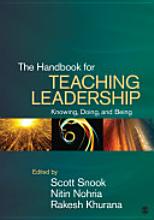
The Handbook For Teaching Leadership, Knowing, Doing and Being. Chapter 16 is "Creating Leaders: An Ontological Model", written by Werner Erhard, Michael C. Jensen and Kari Granger
“Creating Leaders: A New Model”
New York University (2013)
University of California, Berkeley and
University of Chicago (2015)
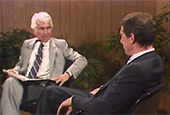
Werner Erhard Discusses Leadership with Professor Warren Bennis
Journal of Leadership Education:
Creating Leaders: A Pilot Pre/Post Evaluation of an Ontological / Phenomenological Model
Clemson College of Business and Behavioral Science brings this cutting edge leadership course to their Faculty, Staff, Students, Alumni and Business Community -
“I can tell you that the course [Being A Leader and The Efective Exercise of Leadership] was for me, truly transformational. Clemson is fortunate to have the opportunity to host and present this course, and I assert and assure you that anyone in any organization can, if you dare, become a true and effective leader.” -Robert McCormick, Dean of Clemson College of Business
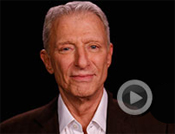
Werner Erhard: Being A Leader and The Effective Exercise of Leadership

Werner Erhard: Being A Leader and The Effective Exercise of Leadership
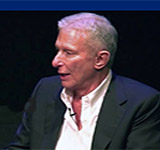
Werner Erhard, University of Pennslyvannia
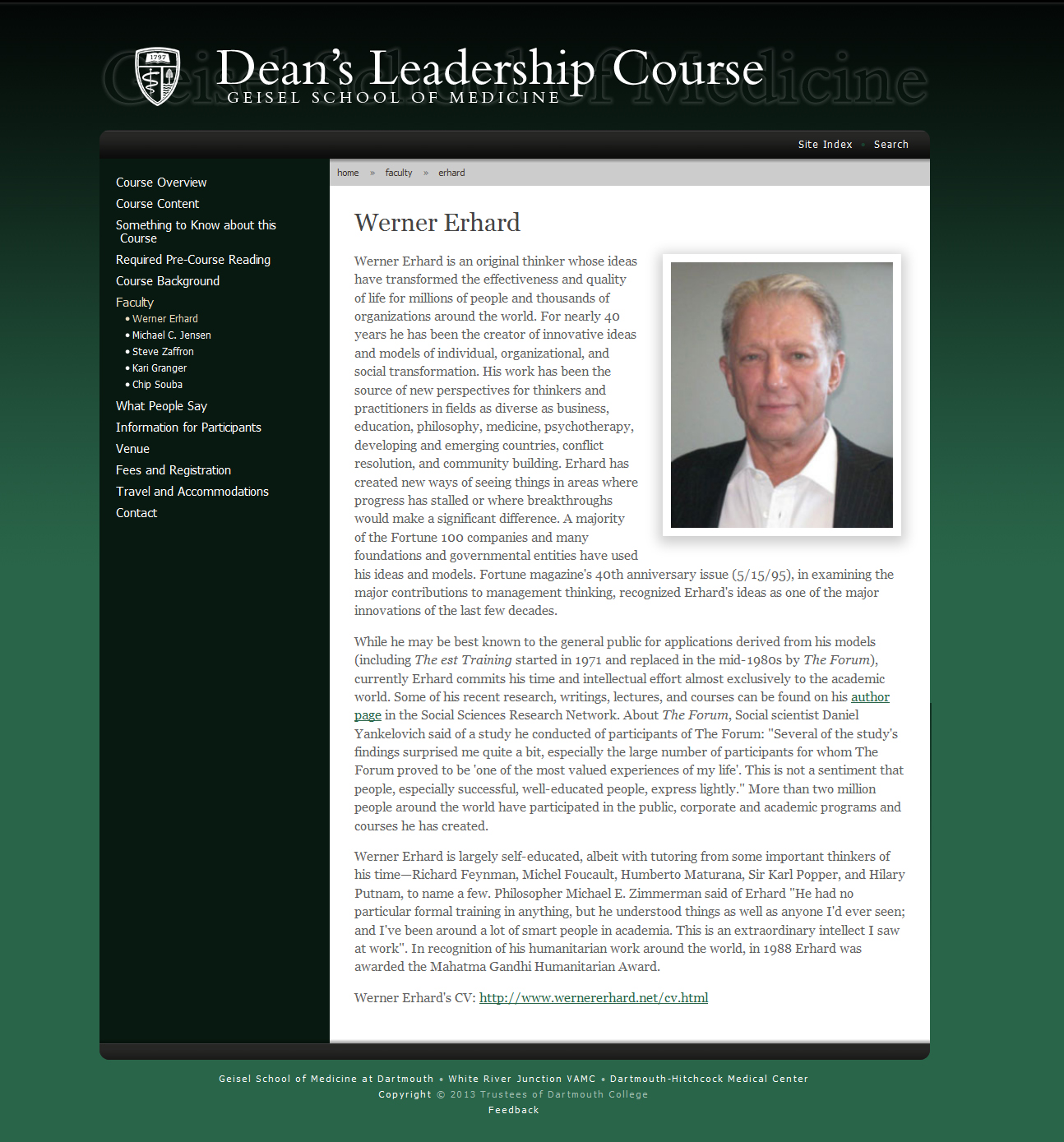
Werner Erhard at Dartmouth College
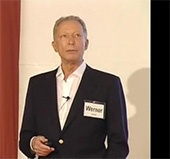
Werner Erhard, Mumbai, India, 2010
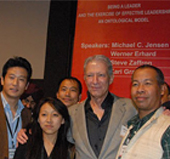
IC Centre for Governance, Panchgani, India
"Leadership: An Ontological Approach"
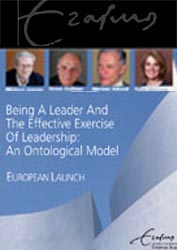
"Being a Leader and The Effective Exercise of Leadership: An Ontological Model," led by Dr.Michael Jensen, Werner Erhard, Steve Zaffron and Kari Granger at Erasmus Academie, Rotterdam, Netherlands